The Reality: Most Candidates Are Professionals
The image of the full-time student preparing for EPSO in a library is a myth. The vast majority of EPSO candidates are working professionals — lawyers, economists, policy analysts, translators, researchers — juggling preparation alongside careers, families, and daily life.
If this describes you, know that you are the norm, not the exception. The candidates who make the reserve list are not those with the most free time. They are those who use their limited time most effectively.
The Framework: 5-7 Hours Per Week
A realistic and effective preparation plan for a working professional looks like this:
Weekdays (Monday to Friday): 3-4 sessions of 20-30 minutes each. These are focused micro-sessions, not casual browsing.
Weekend: One longer session of 1.5-2 hours, ideally for timed simulations and review.
Total: 5-7 hours per week over 10-12 weeks. This is enough time to cover all five AD5 test components, build real competence, and enter the exam room with confidence.
What to Do in 25-Minute Micro-Sessions
Short sessions are not inferior to long study blocks — they are often superior for building the reflexes that EPSO tests demand. Here is how to use them:
Monday — Verbal Reasoning. Read one passage and answer 4-5 questions. Focus on the technique: true, false, or cannot say based on the text alone. Review your errors.
Tuesday — Numerical Reasoning. Complete 3-4 problems. Work through the calculation method, not just the answer. If you got stuck, identify which mathematical concept was the bottleneck.
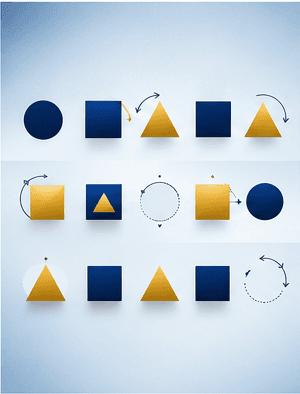
Wednesday — Abstract Reasoning. Complete a set of 8-10 patterns. Practice timed. Focus on the scanning method: check rotation first, then counting, then movement.
Thursday — EU Knowledge or Digital Skills. Review one topic area. Read the relevant summary, then test yourself with practice questions. Active recall (testing yourself) is far more effective than passive reading.
Friday — Mixed review. Revisit the questions you got wrong during the week. Understanding your errors is where real improvement happens.
The Weekend Deep Session
Your 1.5-2 hour weekend session serves a different purpose: full-length timed simulations. This is where you practice the exam experience itself — time pressure, stamina, the sequence of switching between test types.
After each simulation, spend 30 minutes on review. Not just checking answers, but asking: where did I lose time? Which question types slow me down? Where did I guess versus know?
Managing Energy, Not Just Time
Preparing while working is as much an energy management challenge as a time management challenge. These principles help:
Study at your peak. If you are sharpest in the morning, wake up 30 minutes earlier for your micro-session. If you are a night person, study after dinner. Do not fight your biology.
Protect your preparation time. Block it in your calendar as you would a meeting. If preparation is "whenever I have a moment," it will not happen consistently.
Do not sacrifice sleep. Sleep-deprived practice is less effective and does not consolidate into long-term memory. Six hours of well-rested study per week beats ten hours of exhausted cramming.
Accept imperfect sessions. Some days you will study for 15 minutes instead of 30. Some weeks you will miss a day. This is normal. Consistency over months matters more than perfection in any single week.
The Two Things That Waste Preparation Time
1. Passive reading without testing. Reading about EPSO is not preparing for EPSO. Every session should include active practice: answering questions, completing exercises, testing recall. If you are not producing answers, you are not improving.
2. Preparing strengths instead of weaknesses. It feels good to practice the test type you are best at. It is also the least valuable use of your time. Improving from poor to adequate on your weakest component has far more impact on your ranking than improving from good to excellent on your strongest one.
A 12-Week Calendar for Working Professionals
Weeks 1-4 (Foundation): Focus on understanding each test type. Learn the format, the question structures, the common traps. Practice untimed to build accuracy first.
Weeks 5-8 (Building Speed): Introduce timed practice. Bring each component down to exam-pace timing. Identify your weakest area and allocate extra time to it.
Weeks 9-11 (Simulation): Full-length timed simulations every weekend. Mixed practice during the week. Focus on your flagging strategy and time allocation.
Week 12 (Taper): Light review only. Revisit key concepts and formulas. No new material. Rest properly before the exam.
This is not a plan that requires heroic discipline. It is a plan that respects the reality of a working life while delivering results that matter.