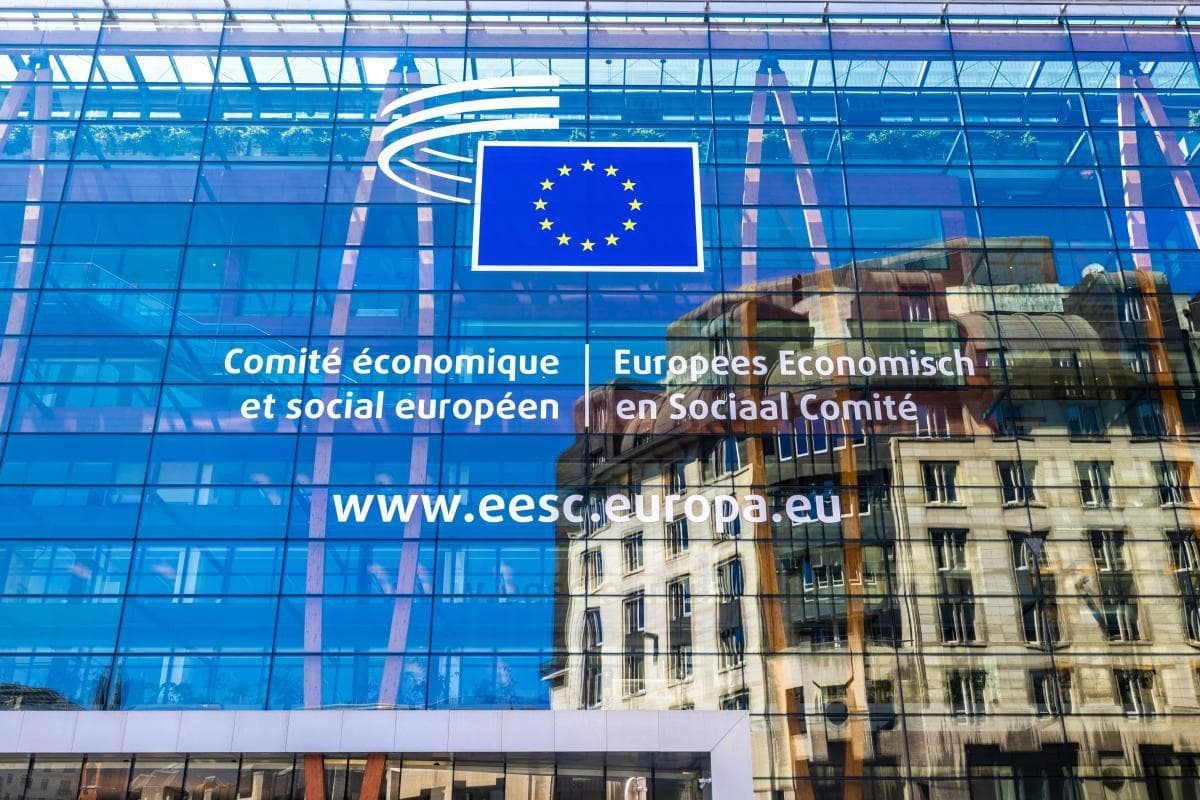
Brussels is where your EU career comes to life
Passing the EPSO exam is the beginning. What comes next — the city, the work, the community — is what makes an EU career genuinely rewarding. Brussels is home to the European Commission, the Council of the EU, and much of the European Parliament's daily work. It is also a city that roughly 60,000 EU institution employees call home, alongside one of the most diverse international communities in the world.
Here is what life in Brussels actually looks like when you get there.
The salary: what you actually take home
EU official salaries are set by the Staff Regulations and adjusted annually. Here is what an AD5 entry-level official can expect in 2026:
| Component | Monthly amount |
|---|---|
| Basic salary (AD5 Step 1) | ~EUR 6,150 |
| Expatriation allowance (16%) | ~EUR 985 |
| Household allowance (if applicable) | ~EUR 200-500 |
| Dependent child allowance (per child) | ~EUR 511.71 |
| Gross total (single expat, no children) | ~EUR 7,135 |
| Community tax (effective ~12-15%) | -EUR 850 to -1,070 |
| Approximate net take-home | ~EUR 5,500-6,300 |
A few things that make a significant difference:
- No national income tax. EU salaries are exempt from Belgian (or any national) income tax. Instead, a community tax is deducted at source. The effective rate is considerably lower than most national tax rates.
- Expatriation allowance. If you relocate to Belgium from another country (which most EU officials do), you receive 16% of your basic salary as an expatriation allowance — with a minimum of EUR 694/month.
- Installation allowance. When you first arrive, you receive a lump sum to help with relocation costs (typically two months of basic salary).
- Annual travel allowance. A flat-rate travel allowance covers annual trips to your home country.
For contract agents (CAST), salaries are lower but still competitive. An FG IV contract agent (the highest function group, requiring a university degree) starts at approximately EUR 3,800-4,500/month basic salary, with similar allowances applied on top.
The neighborhoods: where EU officials live
Brussels is a city of 19 communes, each with its own character. Here are the areas most popular with EU staff:
Etterbeek — The EU Quarter neighbor
Walking distance to the Schuman roundabout and the Commission's Berlaymont building. Etterbeek combines convenience with a genuine neighborhood feel — local markets, independent restaurants, and the beautiful Parc du Cinquantenaire. This is where many officials live during their first years, especially those who want a short commute.
Rent: One-bedroom apartment EUR 900-1,200/month.
Ixelles — International and vibrant
Home to the European Parliament building, the Flagey area, and a thriving international dining scene. Ixelles is larger and more diverse than Etterbeek, with everything from student areas around ULB to the upscale Avenue Louise. The Matongé neighborhood offers some of the best African cuisine in Europe.
Rent: One-bedroom apartment EUR 850-1,300/month depending on the area.
Woluwe-Saint-Pierre — Families and green space
Quieter and more residential, Woluwe-Saint-Pierre is popular with families, particularly those with children in the European Schools or international schools. Larger apartments and houses, excellent parks, and a calmer pace — while still well-connected by metro.
Rent: Two-bedroom apartment EUR 1,100-1,500/month.
Saint-Gilles — Creative and affordable
South of the centre, Saint-Gilles has become increasingly popular with younger professionals. Art Nouveau architecture, the Parvis de Saint-Gilles market, and a growing food scene — all at slightly lower rents than Ixelles or Etterbeek.
Rent: One-bedroom apartment EUR 750-1,050/month.
Cost of living: how Brussels compares
Brussels is noticeably more affordable than other major European capitals with comparable salaries:
| Expense | Brussels | Paris | Amsterdam | Luxembourg City |
|---|---|---|---|---|
| One-bed apartment (centre) | EUR 950-1,200 | EUR 1,400-1,800 | EUR 1,500-1,900 | EUR 1,600-2,000 |
| Monthly transport pass | EUR 56 | EUR 90.80 | Amsterdam discontinued its monthly pass in 2026; pay-per-ride or OV-chipkaart subscriptions are available | Free (all public transport in Luxembourg has been free since 2020) |
| Restaurant meal (mid-range, 2 people) | EUR 60-80 | EUR 80-120 | EUR 80-110 | EUR 90-120 |
| Monthly groceries (one person) | EUR 300-400 | EUR 350-500 | EUR 350-450 | EUR 400-500 |
The combination of EU-level salary with Brussels-level costs means most officials enjoy a genuinely comfortable standard of living — with room to save, travel, and invest.
The international community
Brussels has over 180 nationalities represented in its population. Between the EU institutions, NATO, and hundreds of international organisations, lobbying firms, and NGOs, it is one of the most cosmopolitan cities on the planet.
What this means in practice:
- Language is rarely a barrier. English and French are widely spoken. Many officials speak 3-4 languages and switch between them naturally. You can live comfortably in English, but learning some French (or Dutch, in the northern communes) enriches the experience.
- Making friends is natural. The city has an enormous expat infrastructure: international clubs, sports teams, cultural associations, language exchange groups, and professional networks. The EU institutions themselves have active staff associations for everything from running to photography to wine tasting.
- The food reflects the diversity. Brussels offers world-class Belgian cuisine (mussels, frites, waffles, chocolate, beer) alongside excellent Italian, Japanese, Lebanese, Ethiopian, Thai, Indian, and virtually every other cuisine — often at very reasonable prices.
Work-life balance
EU institutions generally offer strong work-life conditions:
- Working hours: Typically 8:30-17:30 or 9:00-18:00 with flexibility. The Commission and other institutions have been progressively adopting flexible working arrangements.
- Annual leave: 24 days minimum, plus EU public holidays and institutional closing days (typically between Christmas and New Year).
- Teleworking: Most institutions allow 2-3 days of teleworking per week, a policy that has become standard since 2020.
- Parental leave: Generous by international standards, with options for both parents.
- Career development: Training budgets, language courses, and internal mobility programs. Many officials move between DGs (Directorates-General) or even between institutions over their career.
Brussels itself supports a good quality of life. The city is compact — most commutes are under 30 minutes by metro or bike. The Eurostar connects you to London in under two hours, Paris in 1.5 hours, and Amsterdam in under two hours. Weekend trips to Bruges, Ghent, or the Belgian coast take under an hour.
The work itself: why it matters
Beyond the practical benefits, working in the EU institutions means contributing to policies that affect 450 million people. Whether you work on trade negotiations, climate policy, digital regulation, enlargement, or internal administration — the scale and impact are genuinely significant.
You will work alongside colleagues from 27 member states, each bringing different perspectives, legal traditions, and cultural approaches. The multilingual, multicultural environment stretches your horizons daily — and it is what makes the work uniquely stimulating.
Former officials consistently describe two things: the intellectual quality of the work and the lifelong friendships formed across borders.
Your future city is waiting
Brussels is a city that rewards curiosity. It is compact enough to feel manageable from day one, international enough that you will never feel like an outsider, and affordable enough that your EU salary goes a long way. The cultural scene punches above its weight, the food is exceptional, and the work you will do carries genuine meaning.
Every candidate who passes the EPSO exam gets to experience this. That future is within reach.
Start building toward it today. Join the EU-Now waitlist for structured EPSO preparation, adaptive practice, and the tools that help you turn your EU career ambition into reality.